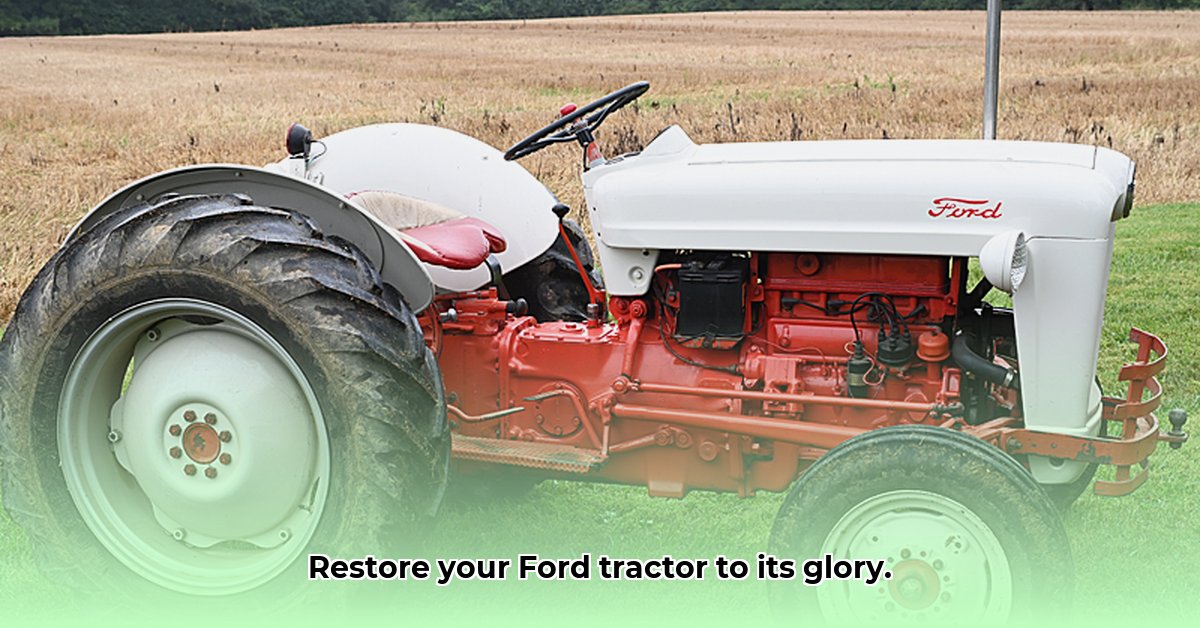
The Enduring Legacy of the Ford NAA Tractor
The rumble of a classic Ford NAA tractor isn't just a sound; it's a time capsule, transporting you back to an era of hardworking farmers and sprawling fields. Introduced in 1953, the NAA quickly became a staple of American agriculture, its innovative live hydraulic system and powerful overhead-valve engine significantly boosting efficiency. Though overshadowed by later models, the NAA's enduring charm and robust engineering have solidified its place in the hearts of vintage tractor enthusiasts, resulting in a dedicated collector's market. For advice on restoring the iconic red paint, see this helpful guide on tractor painting. This comprehensive guide will navigate you through the history, technical nuances, and practical steps involved in restoring this iconic red machine.
A Piece of Farming History: The Ford NAA's Rise to Icon Status
The Ford NAA wasn't just another tractor; it was a revolution. Imagine the 1950s—farmers relied on these workhorses to cultivate the land, and the NAA's innovative features made a significant impact. Its live hydraulic system, a departure from previous designs, offered a smoother, more efficient operation, while its overhead-valve engine delivered impressive power for its time. This blend of innovation and practicality cemented its place in agricultural history. While newer, more powerful tractors eventually surpassed it in sales, the NAA maintains a special position, especially among collectors who appreciate its heritage and engineering excellence. A well-restored NAA is a testament to a bygone era and a stunning example of agricultural engineering.
Delving into the Design: Technical Innovations of the NAA
What set the NAA apart? Its revolutionary live hydraulic system operated independently of the power take-off (PTO), unlike earlier models. This resulted in noticeably smoother operation and increased efficiency. The "Red Tiger" overhead-valve engine further enhanced its appeal, providing 32 horsepower—a significant output for the era. The 1954 600 series models incorporated further refinements, including upgraded braking and PTO components, showcasing Ford's commitment to continual improvement within this remarkable design. These upgrades, made in line with the latest ASAE (American Society of Agricultural and Biological Engineers) standards of the time, solidified the NAA’s reputation for reliability and performance.
Restoring Your Red Ford: A Practical Guide to the Restoration Process
Restoring a Ford NAA is a deeply rewarding project, but it requires meticulous planning, patience, and a healthy dose of mechanical aptitude. Think of it as a complex puzzle—each step is crucial in bringing this piece of agricultural history back to life.
1. Comprehensive Assessment: Begin with a thorough inspection, documenting the tractor's condition. Take detailed photos of every component—this will be invaluable during reassembly.
2. The Parts Quest: Sourcing parts can be challenging. Utilize online communities, specialized dealerships, and even local scrapyards. Persistence is key.
3. Meticulous Disassembly: Carefully disassemble the tractor, photographing each step. This step-by-step photographic record will serve as your personalized guide during reassembly. Remember to prioritize safety and wear appropriate protective gear.
4. Deep Cleaning and Repair: Meticulously clean every component. Repair or replace any damaged parts. This phase requires both attention to detail and mechanical skill.
5. Reassembly: Follow the reverse order of disassembly, using your photos for guidance. Precision and patience are paramount during this phase.
6. Test Drive and Fine-Tuning: After reassembly, thoroughly test the tractor, adjusting as needed. This is a moment to celebrate your accomplishment!
The NAA in the Collector's Market: Assessing Value and Rarity
The value of a restored NAA, particularly rare variants such as the Golden Jubilee edition, can be considerable. Several factors influence price, including overall condition, rarity of specific features (such as the Golden Jubilee edition’s unique paint and badging), and completeness. Research online marketplaces, auction records, and connect with knowledgeable collectors to gauge current market value. Understanding these factors allows for a more informed acquisition or sale of these highly sought-after pieces of agricultural history.
Risk Assessment and Safety Precautions
Restoring any vintage tractor carries inherent risks. The following table highlights potential issues and mitigation strategies:
| Component | Potential Issues | Mitigation Strategies |
|---|---|---|
| Engine | Wear and tear, component failure | Regular maintenance, sourcing quality replacement parts |
| Hydraulic System | Leaks, seal failure | Routine fluid changes, proactive seal replacement/repair |
| Electrical System | Wiring issues, component malfunctions | Preventative maintenance, careful inspection of all wiring |
| Body/Cosmetic Damage | Rust, dents, faded paint | Professional restoration services, high-quality replacement parts |
Always adhere to local regulations for hazardous waste disposal. Prioritize safety at all times!
The Enduring Appeal: A Legacy of Innovation and Hard Work
The Ford NAA tractor, despite not being a top seller in its time, enjoys a loyal and growing following among collectors and restoration enthusiasts alike. Its robust design and historical significance continue to captivate those drawn to vintage agricultural machinery. Restoring an NAA is far more than just a mechanical undertaking; it's a tribute to the ingenuity and craftsmanship of a bygone era. It's a testament to the enduring legacy of hardworking farmers and the machines that helped them shape the American landscape. The NAA remains a coveted piece of agricultural history.
How to Restore a Ford NAA Tractor Golden Jubilee Edition: A Focused Guide
The Golden Jubilee edition of the Ford NAA tractor represents the pinnacle of this iconic design. Its special Vermillion Red paint further emphasizes its significance as a collectible piece of agricultural heritage. Restoring one requires an extra level of care and attention to detail.
Sourcing Parts: Online forums such as Yesterday's Tractors and specialized vendors like NNALert are invaluable resources for locating original or high-quality replacement parts. Remember, finding a perfect paint match for the iconic Vermillion Red can be a challenge requiring thorough research.
Mechanical Considerations: Maintaining the originality of the live hydraulics and overhead-valve engine is key. Thorough cleaning and, if needed, replacement of critical components such as axle seals are crucial. Always prioritize safety and consult a qualified mechanic if needed.
Cosmetic Restoration: The iconic Vermillion Red paint requires careful attention. Replicating the original finish demands patience and expertise. Minor cosmetic repairs, such as fender restoration, might require creative solutions using period-appropriate materials while balancing originality with practicality.
Value and Investment: A well-restored Golden Jubilee edition is a highly desirable item within the collector market, commanding a premium price compared to standard NAA models. The rarity and meticulous preservation play significant roles in determining its ultimate value.